
Have you ever looked up at a sky so full of stars that it makes you feel small and curious all at once?
Mount Shasta's Night Sky: Stargazing And Astronomy Tours
Mount Shasta's high elevation, remote location, and clear air make it one of the best places in California to observe the night sky. You can find guided astronomy tours, public star parties, and excellent solo stargazing locations across the region. This guide helps you plan a memorable night under Mount Shasta's stars, whether you're a first-time viewer or an experienced amateur astronomer.
Why Mount Shasta Is Great for Stargazing
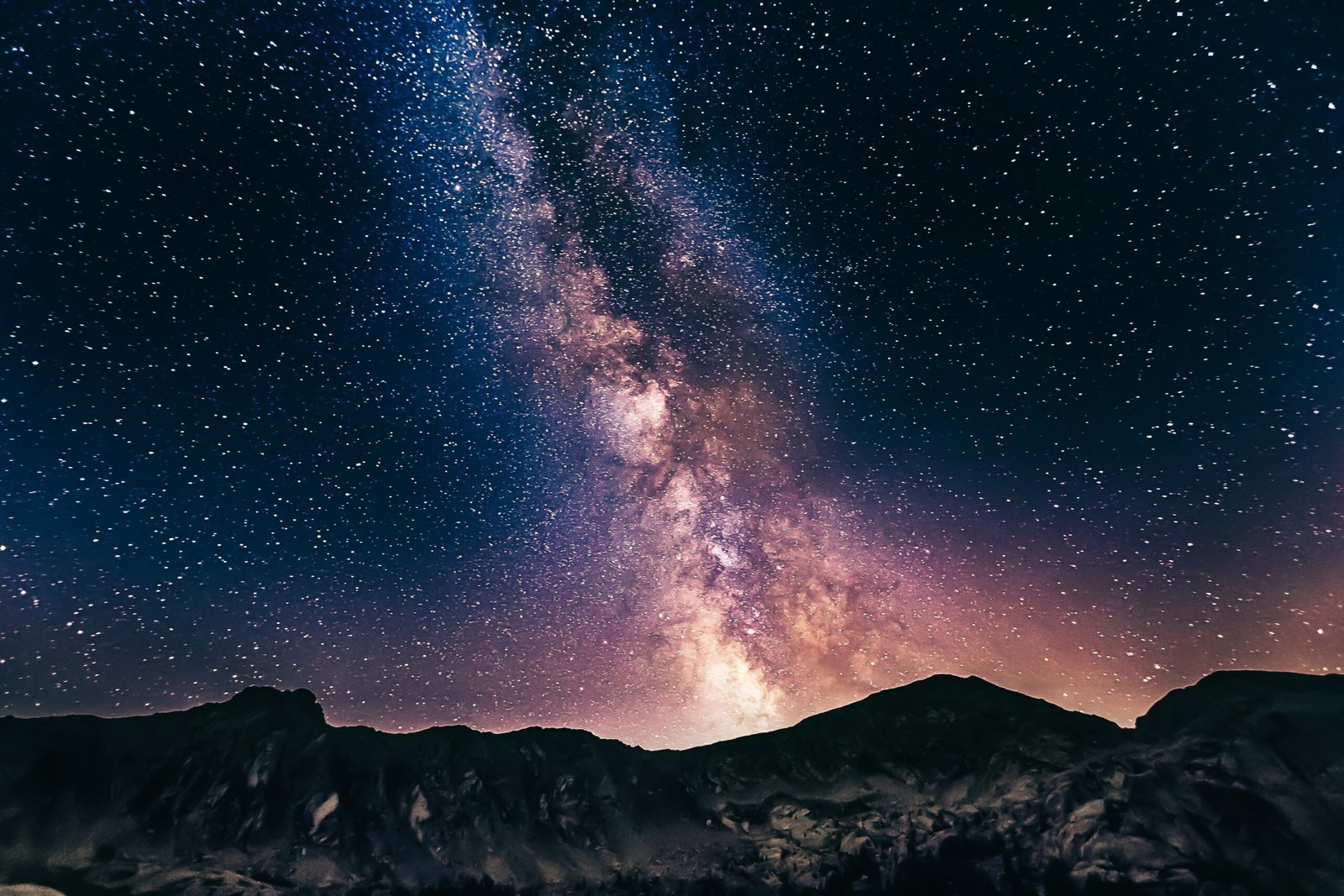
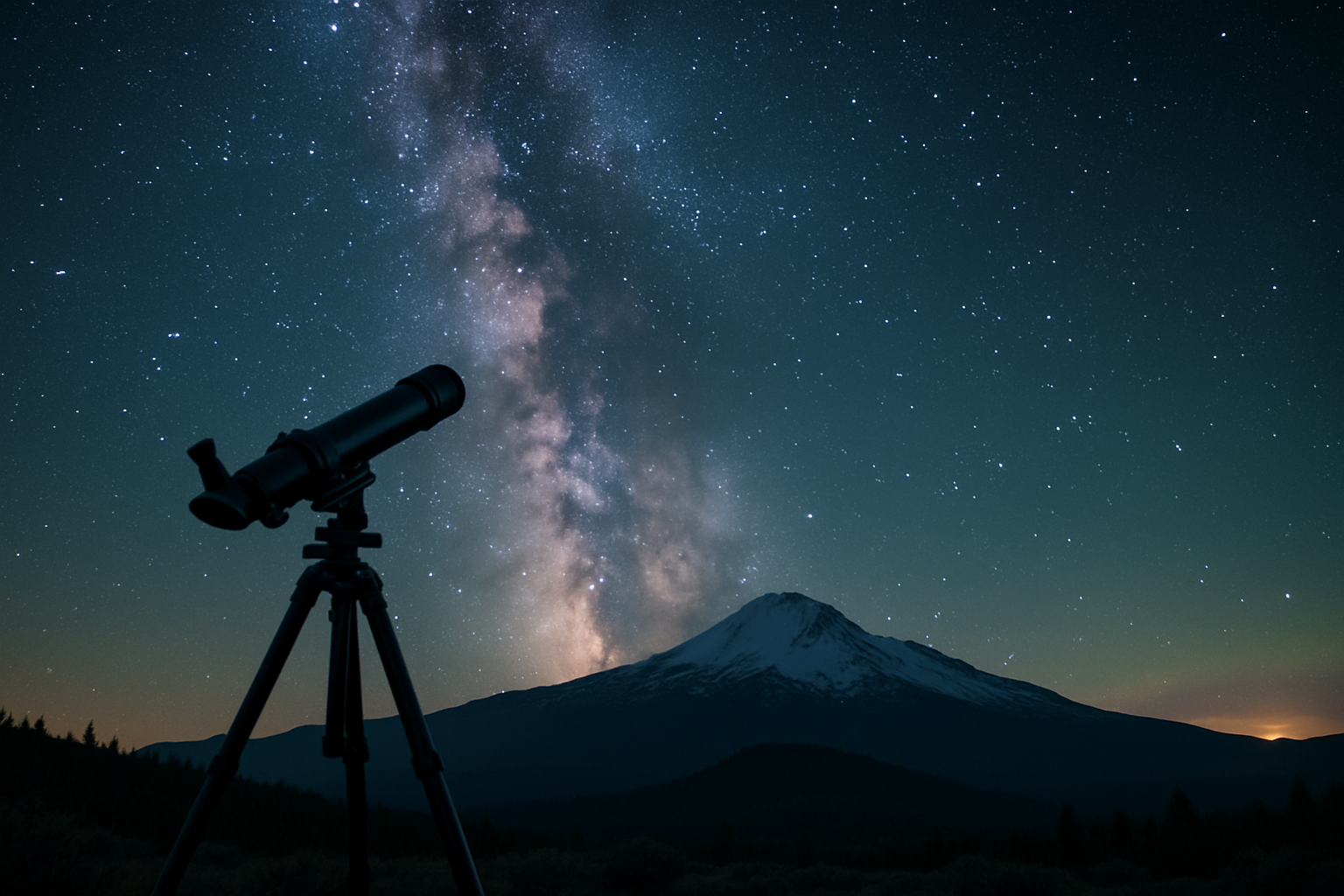
Mount Shasta stands over 14,000 feet and sits well away from major metropolitan light domes, giving you long stretches of dark sky. The mountain's clean alpine air reduces atmospheric turbulence, which improves seeing conditions for telescopes and astrophotography. In addition, seasonal weather patterns often produce several clear nights per month, particularly in late summer and fall, which are prime times for observing.
This image is property of images.unsplash.com.
Light Pollution and Dark Sky Status
Light pollution levels around Mount Shasta are generally low compared with urban areas, but they vary by direction and proximity to towns. Northern and eastern horizons are typically darker than southern horizons, where small towns and highways can create localized glow. You can check live light pollution maps and local ordinances for the most accurate information before you go.
Reading Light Pollution Maps
Light pollution maps use color gradients to show sky brightness; darker colors indicate less light pollution. If you aim to see the Milky Way and faint deep-sky objects, look for regions that map as Bortle Class 3 or darker. Bring a printed or offline version of the map in case cell service is limited.
Local Dark Sky Initiatives
Some communities around Mount Shasta have adopted lighting policies to reduce glare and preserve night skies. These initiatives include fully shielded streetlights, reduced nighttime lighting for public spaces, and public education programs. Supporting or following these initiatives helps protect the night sky for future visitors.
Best Time of Year and Night for Viewing
While you can stargaze any time of year, certain seasons and times of night are better for different targets. Late summer through early fall generally provides warm nights and frequent clear skies, making it ideal for extended observation sessions. Winter nights are colder but often offer exceptionally steady seeing, which is great for planetary detail.
Seasonal Highlights
- Spring: Great for viewing Jupiter and bright spring constellations. Atmospheric turbulence can vary.
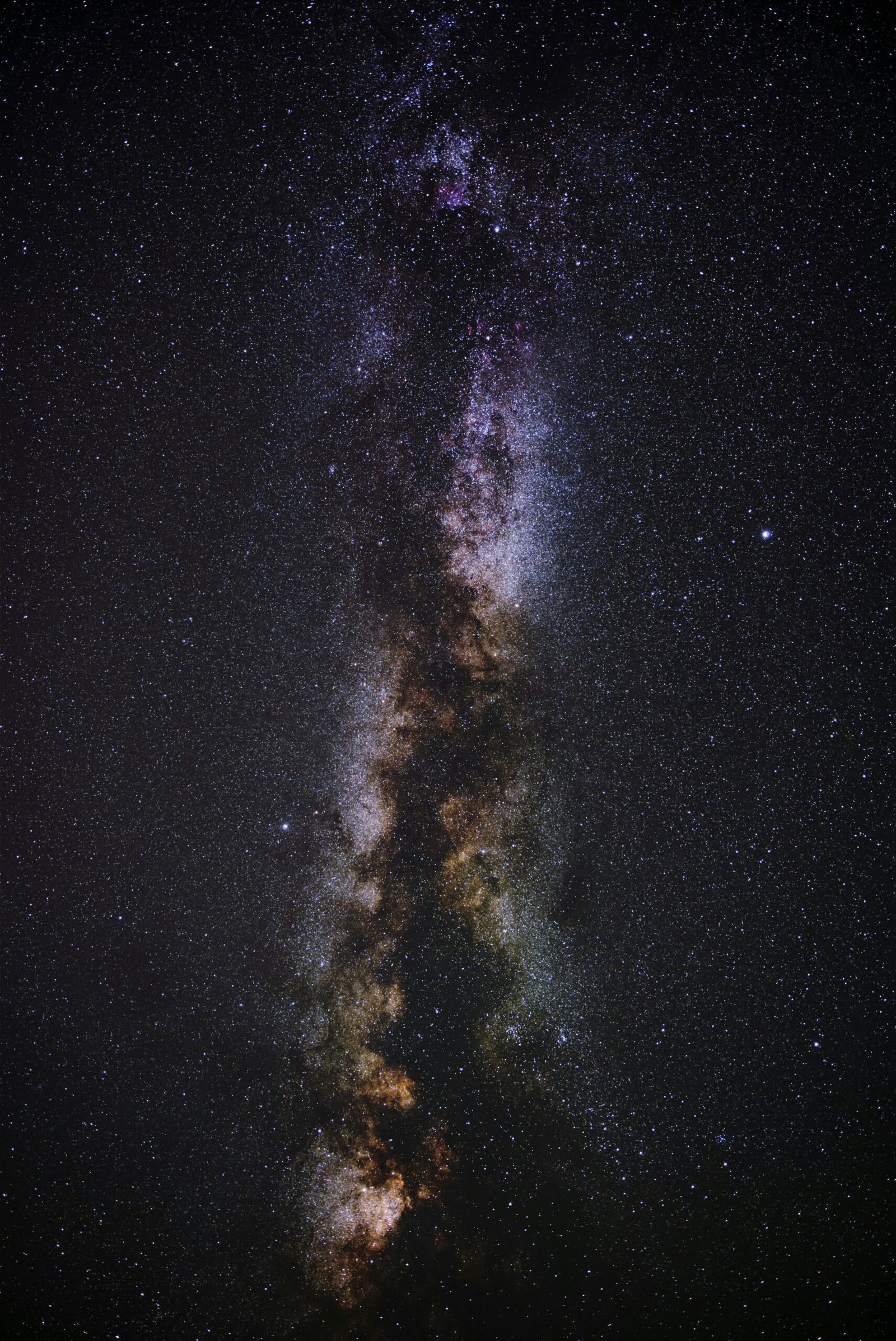
- Summer: Milky Way season; ideal for deep-sky observing and casual star-hopping.
- Fall: Crisp, clear nights; good for galaxies and supernova hunting.
- Winter: Superb for planetary observing and double stars; extended darkness early in the evening.
Moon Phase Considerations
The Moon's brightness significantly affects what you can see. For the best deep-sky views, plan around the new moon and the nights leading up to and following it. If you want to observe lunar features or bright planets, fuller moon phases can be rewarding. Use a lunar calendar to select nights that match your goals.
This image is property of images.unsplash.com.
Common Viewing Targets From Mount Shasta
You can see a wide array of celestial objects: constellations, planets, the Milky Way, star clusters, nebulae, and galaxies. Some targets are seasonal, and some are best near local best-viewing times.
Planets and Bright Objects
You will often be able to observe planets like Jupiter, Saturn, Mars, and Venus, depending on their positions. Jupiter and Saturn are particularly spectacular through a telescope; you can see cloud bands, moons, and Saturn's rings on a clear night. Venus shows phases similar to the Moon when it's visible.
Deep-Sky Objects
The core of the Milky Way, globular clusters such as M13 and M92, emission nebulae like the Orion Nebula (seasonal), and galaxies like the Andromeda Galaxy are common targets. Dark, moonless nights near the new moon are the best time to see these faint objects.
How Altitude Helps Observing
Mount Shasta’s elevation reduces the amount of atmosphere between you and the stars, which lowers atmospheric extinction and improves clarity. Higher altitude sites generally offer steadier air, which helps you resolve fine detail when you use a telescope. You should, however, be aware of altitude-related physical effects, which we cover below.
Altitude Safety Notes
You may experience mild altitude effects such as shortness of breath or fatigue at higher elevations, especially if you ascend quickly. Stay hydrated, move slowly, and limit strenuous activity when you first arrive. If you have pre-existing health conditions, consult your physician before traveling to high-altitude areas.
This image is property of images.unsplash.com.
Astronomy Tours and Guided Programs
Local providers and astronomy clubs offer guided stargazing tours and telescope nights, often combining education with hands-on telescope use. These programs are helpful if you’re new to stargazing or want to try high-end equipment without bringing your own.
Typical Tour Formats
- Public star parties: Community events where multiple telescopes are available for public use and local astronomers offer expertise.
- Private guided tours: Led by professionals who bring portable telescopes and tailor the session to your interests.
- Combined hiking-and-stargazing: Guided evening hikes that end at a dark-sky spot for telescope viewing.
What You Can Expect From a Tour
On a guided tour, you’ll receive an orientation on the night sky, learn how to use telescopes or binoculars, and receive pointers for identifying constellations and planets. Guides often highlight seasonal objects and tailor explanations to your level of interest.
Local Astronomy Clubs and Public Events
Several clubs and organizations in Northern California and Southern Oregon run regular star parties, public talks, and workshops. These groups are excellent resources for gear recommendations, local conditions, and social observing opportunities.
Benefits of Joining a Club Event
Club events let you try many telescopes, get practical advice, and meet experienced observers who can share local knowledge. They often organize events timed with meteor showers, eclipses, and planetary oppositions, giving you a chance to participate in larger observing campaigns.
Gear: What to Bring for a Night Under the Stars
Packing the right gear makes your night comfortable and productive. Use the table below as a checklist for personal, astronomical, and safety items to bring.
| Category | Item | Notes |
|---|---|---|
| Personal | Warm clothing, layers | Nights are cooler at altitude; bring gloves and hat. |
| Personal | Headlamp with red light | Preserve night vision; red filters reduce glare. |
| Astronomical | Binoculars (7×50 or 10×50) | Great for beginners and wide-field views. |
| Astronomical | Telescope (optional) | If you bring one, practice setup at home first. |
| Astronomical | Star charts or apps | Use offline charts if cell service is unreliable. |
| Photograph y | Camera, tripod, wide-angle lens | For Milky Way and long exposures. |
| Navigation | GPS or map and compass | Mountain terrain can be confusing at night. |
| Shelter | Camping kit or warm blanket | If you plan to stay late, pack for overnight comfort. |
| Safety | First-aid kit, water, snacks | Always be prepared for minor emergencies. |
| Environmental | Trash bags, leave-no-trace supplies | Pack out everything. |
Choosing Binoculars vs Telescope
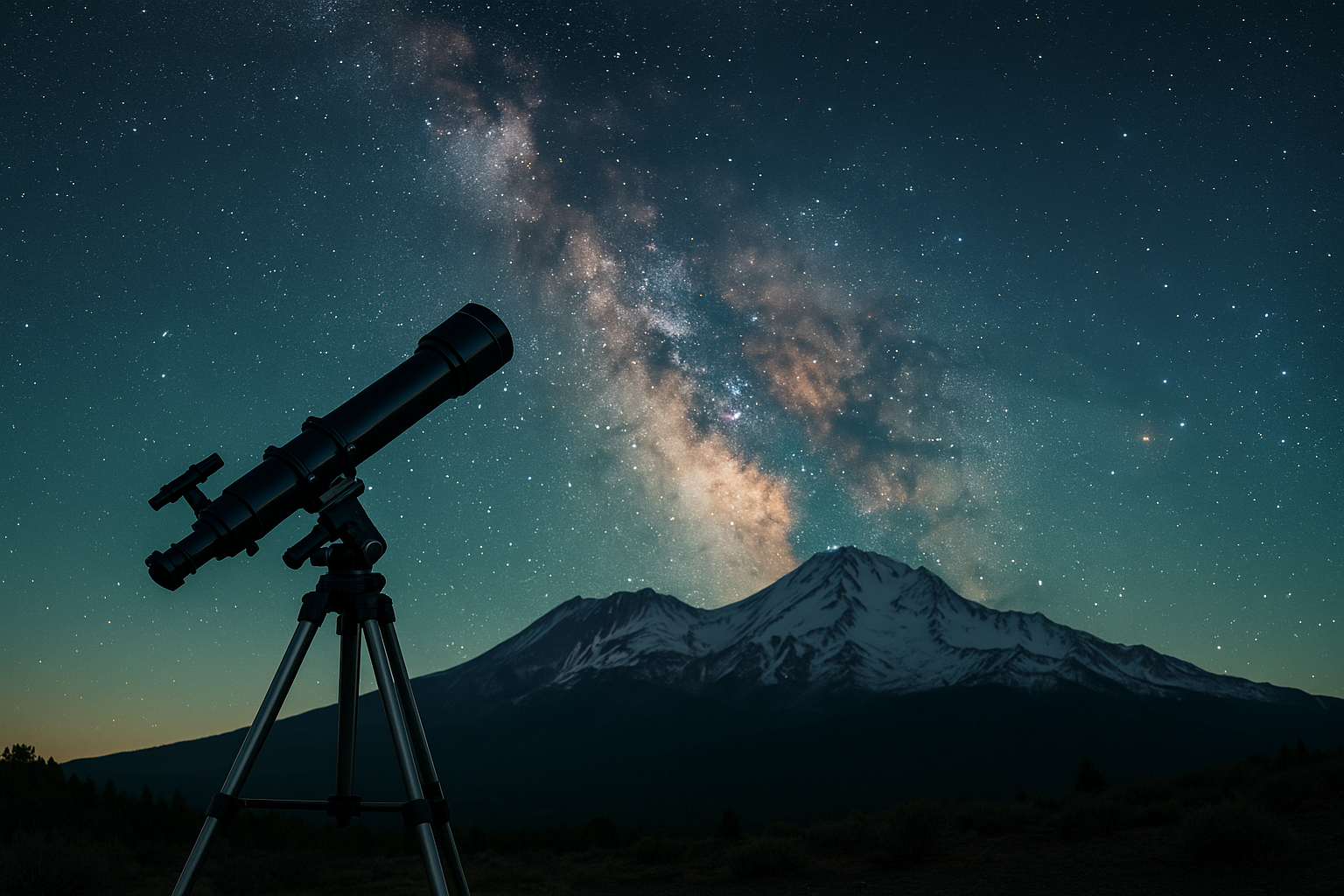
If you're just starting, a pair of 7×50 or 10×50 binoculars will give you bright, wide-field views and are easy to carry. A small Dobsonian or refractor telescope offers better magnification and deeper views, but requires more setup and transportation. Consider portability, ease of use, and your observing goals when choosing gear.
Astrophotography Tips for Mount Shasta
If you want to photograph the night sky, Mount Shasta offers dramatic foregrounds and dark skies suitable for Milky Way panoramas. Basic landscape astrophotography needs a sturdy tripod, a wide-angle fast lens (f/2.8 or faster), and a camera with manual control. For deep-sky imaging, you'll need tracking mounts and longer exposures.
Settings for Milky Way Shots
A good starting point for Milky Way photography: ISO 1600–6400, aperture f/2.8–f/4, and exposure time around 15–25 seconds depending on focal length to avoid star trails. Use the 500/600 rule (500 divided by focal length) as a rough guideline to limit trailing. Shoot in RAW and use dark-frame subtraction if your camera supports it.
Advanced Astrophotography
For galaxies, nebulae, and deep-sky targets, use a motorized equatorial mount, guide scope, and stacking software to combine many long exposures. You can rent equipment locally or attend workshops to learn advanced techniques before investing in gear.
Recommended Stargazing Locations Around Mount Shasta
There are several excellent public spots for stargazing, each with its own character. Some are drive-up locations; others require short hikes. The table below lists popular sites and what you can expect.
| Location | Access | Highlights |
|---|---|---|
| Castle Lake area | Short hike/drive | High, dark skies with mountain reflection opportunities. |
| Lake Siskiyou | Drive-up | Wide horizons; good for family-friendly observing. |
| Castle Crags State Park | Drive-up & short hikes | Scenic granite formations and quieter skies. |
| Mt. Shasta Ski Park (off-season) | Drive-up | Elevated views toward northern sky; quiet at night. |
| Private land / ranches (by permission) | Permission required | Possibly the darkest skies if you have permission. |
Safety and Access Notes
Always check road conditions and park hours: some areas close at night or seasonally. Obtain necessary permits if required and respect private property. Be mindful of wildlife and avoid driving off-trail.
Camping and Lodging Options for Stargazers
If you plan a multi-night trip, you can choose among front-country campsites, backcountry sites, and local lodges. Camping near your observing site reduces travel time and lets you observe multiple nights in a row.
Front-Country Camping
Front-country campgrounds often have amenities such as restrooms and parking, which makes them convenient for families. These sites can have some ambient light, so choose the darkest available within the campground.
Backcountry and High-Elevation Camping
Backcountry camping gives you the best access to remote dark skies but requires more preparation. Pack for colder temperatures and follow leave-no-trace principles. Make a plan with someone who knows your route and expected return time.
Stargazing Etiquette and Safety
Good practices keep the experience safe and enjoyable for everyone. Reduce your light use, be considerate of other observers, and respect local wildlife and property.
Simple Etiquette Rules
- Use red-light headlamps to preserve your and others’ night vision.
- Keep noise levels low so guides and fellow observers can communicate.
- Avoid shining bright lights at telescopes or other people’s eyes.
- If someone is observing a faint object, step back to avoid casting shadows.
Wildlife and Environmental Safety
Night in the mountains is active: nocturnal animals, insects, and changing weather can affect your comfort and safety. Store food properly to avoid attracting animals, and keep a safe distance if you encounter wildlife.
Accessibility and Family-Friendly Options
Many stargazing locations and events are suitable for families and for people with mobility needs. Drive-up sites, open fields, and public parks can offer easier access than remote trailheads.
Tips for Stargazing With Kids
Bring binoculars, snacks, and blankets to keep kids comfortable during longer observing sessions. Short, guided activities such as constellation scavenger hunts make the night more engaging for young observers. Plan for earlier bedtimes if needed.
Accessibility Considerations
If you or a companion use mobility aids, choose sites with paved or compacted surfaces when possible. Contact tour providers in advance to confirm ADA accommodations and to allow them to prepare accessible equipment.
Weather and Cloud Forecasting Tools
Accurate forecasting improves your chances of picking clear nights for stargazing. Local weather can be unpredictable in mountainous terrain, so check multiple sources and be prepared for changes.
Useful Forecast Tools
- Clear Sky Charts or ClearOutside: Offers cloud cover, transparency, and seeing forecasts.
- Local National Weather Service (NWS) pages: For wind, temperature, and precipitation.
- Satellite imagery and radar: Provide short-term real-time cloud movement.
- Mountain-specific forecasts: Helpful for wind and temperature variations near Mount Shasta.
Moon and Planetary Events to Watch For
Certain events make the night sky especially exciting: meteor showers, planetary oppositions, lunar eclipses, and rare conjunctions. Plan your trip around these events if seeing a special event is a priority.
Annual Meteor Showers
Major meteor showers visible from Mount Shasta include the Perseids (August) and Geminids (December). Meteor shower activity and visibility depend on moon phase and local weather. Viewing from a dark site greatly increases your chances of seeing more meteors per hour.
Planetary Oppositions and Conjunctions
Keep an eye on astronomical calendars: when planets reach opposition or perform close conjunctions, they appear especially bright and provide great viewing opportunities even for binoculars.
Permits, Regulations, and Responsible Recreation
Some areas may require permits for overnight stays or special activities. Check with Shasta-Trinity National Forest, state parks, and private landowners for rules and permitting requirements before you go.
Leave No Trace Principles
Follow the Leave No Trace principles: pack out what you pack in, camp responsibly, and minimize campfire impacts. Upholding these principles helps keep the mountain and its skies pristine.
Local Services: Rentals, Guides, and Education
If you don't have your own equipment, local outfitters sometimes rent binoculars, cameras, and telescopes; guides can bring higher-end gear and share knowledge. Educational programs may be available through visitor centers, museums, or local colleges.
How to Choose a Guide or Rental
Look for guides with good reviews, liability insurance, and clear safety protocols. Ask what equipment they provide and whether the price includes transportation, setup, and instruction.
Sample Itineraries
Plan a one-night or multi-night trip based on how much time you have and your interests. These sample itineraries give you a starting point for organizing gear, travel, and accommodations.
One-Night Itinerary (Weekend Evening)
- Late afternoon: Arrive and set up camp or check into lodging.
- Early evening: Light dinner and short hike to a sunset viewpoint.
- 1–2 hours after sunset: Begin telescopic viewing or constellation tour.
- Midnight: Focus on deep-sky objects or astrophotography.
- Early morning: Pack up or continue observing the pre-dawn sky.
Two-Night Itinerary (Leisure Trip)
- Day 1: Arrive, daytime hike, orientation with a local guide, early night for acclimatization.
- Night 1: Guided stargazing session focused on planets and bright deep-sky objects.
- Day 2: Rest, local sightseeing, equipment checks, and practice astrophotography.
- Night 2: Full DIY observing session or advanced private tour.
Common Questions and Answers
Providing answers to common questions helps you plan and sets realistic expectations for a Mount Shasta stargazing trip.
How close to the summit can you safely stargaze?
Road access toward the summit is limited and can be closed seasonally; you should not attempt summit approaches at night without proper experience and equipment. Instead, select high but accessible ridgelines, lake basins, and established viewpoints for comfortable observing.
Can you see the Milky Way from Mount Shasta?
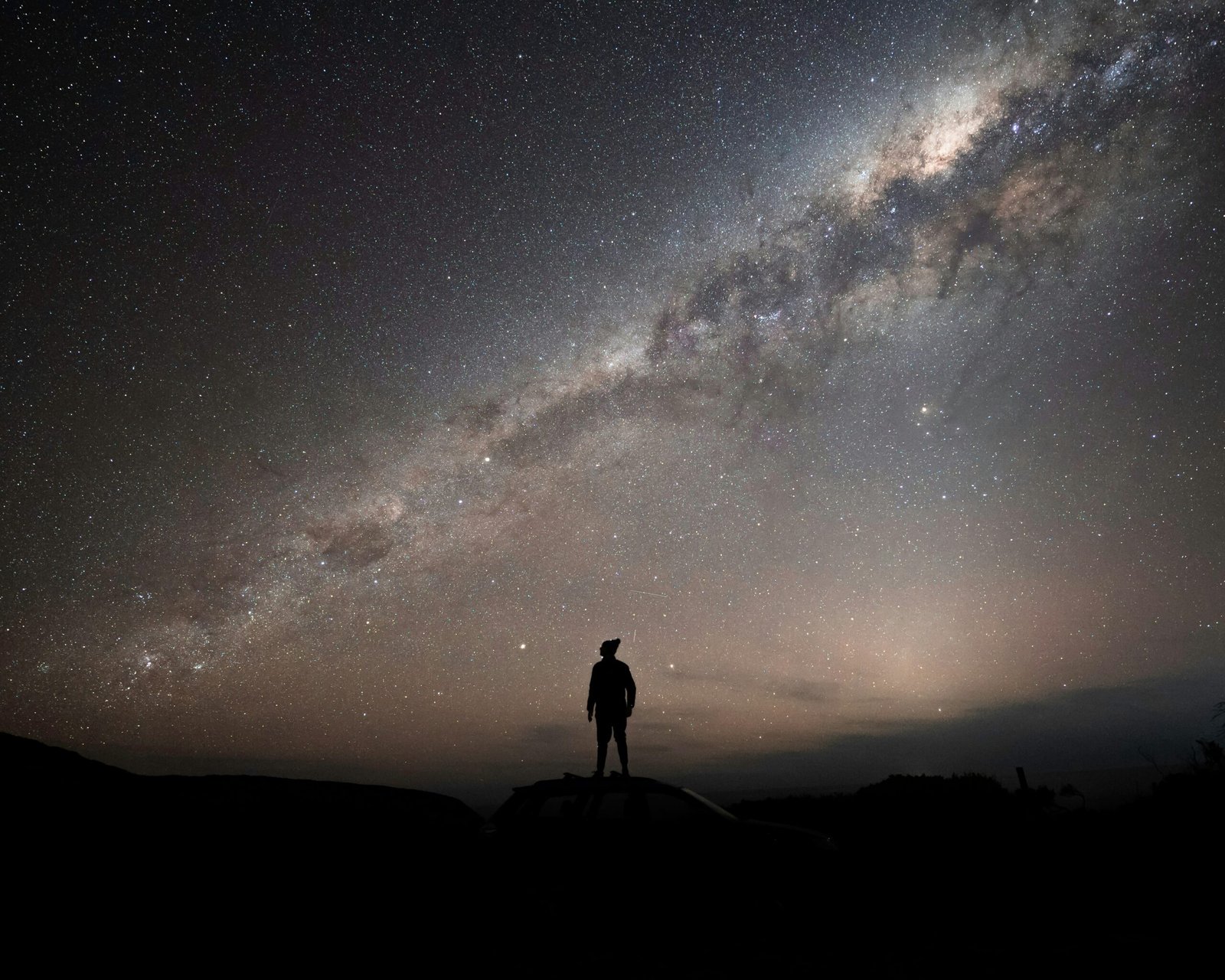
Yes. On moonless nights and from dark sites around the mountain, the Milky Way is clearly visible as a bright band across the sky. Summer months are particularly favorable for viewing the Galactic Center region.
Are there restrictions on drones for astrophotography?
Drone use is regulated and often restricted in national forests, state parks, and near ski areas. Drones are disruptive to people and wildlife at night and can interfere with emergency services; check local regulations and get permits if required.
Recommended Apps and Websites
Using modern tools makes star identification, event tracking, and photography planning much easier. The table below lists helpful apps and resources.
| Purpose | App/Website | Why it helps |
|---|---|---|
| Star charts & identification | Stellarium, SkySafari | Interactive sky maps and object databases. |
| Weather & seeing | ClearOutside, Clear Sky Chart | Mountain-specific seeing and transparency forecasts. |
| Light pollution maps | DarkSiteFinder, LightPollutionMap.info | Find darkest sites and measure light dome impact. |
| Moon and event calendars | Timeanddate.com, In-the-sky.org | Track moon phases, eclipses, and planetary events. |
| Astrophoto planning | PhotoPills, The Photographer’s Ephemeris | Plan Milky Way shots and timing with foregrounds. |
Final Tips for a Great Night Under the Stars
Plan more than one night if possible to increase your chances of clear skies, check multiple forecasting sources, and prepare for colder temperatures than you expect. Be patient: the best views often come after your eyes fully adapt to the dark, which can take 20–30 minutes. Take the time to talk with guides and locals; their knowledge of microclimates and best vantage points can make a big difference.
Respecting the Night
Protecting Mount Shasta’s dark skies is a shared responsibility. Minimize unnecessary lighting, respect posted restrictions, and consider supporting dark-sky friendly local initiatives. Your actions help ensure that future visitors have the same chance to enjoy outstanding night-sky viewing.
Resources and Further Reading
If you want to learn more, consult local park service pages, national forest information, astronomy club calendars, and established astrophotography and amateur astronomy forums. These resources will help you get up-to-date information on weather, events, and any temporary restrictions that might impact your trip.
You’re now equipped with the knowledge to plan a rewarding stargazing experience at Mount Shasta. Whether you join a guided tour, attend a club star party, or set up your own telescope at a quiet lake, the mountain’s skies offer remarkable views that can inspire curiosity and calm in equal measure.