
Introduction: Why Mount Shasta City draws nature lovers
Yes — Is Mount Shasta City known for its flora and fauna? Absolutely, and the reason is unusually specific: the city sits beside volcanic slopes, cold springs, mixed-conifer forests, wet meadows, lakes, and wildlife corridors that connect the Cascade Range with the Klamath Mountains.
You’re probably asking because you want to know whether Mount Shasta City is genuinely biologically distinctive or simply scenic. Based on our analysis, most visitors are looking for four things: what plants and animals they can realistically see, where to see them safely, when to visit, and how to avoid damaging the habitats they came to enjoy.
Mount Shasta City works as a natural gateway to Mount Shasta, Shasta-Trinity National Forest, Lake Siskiyou, Sisson Meadow, Mount Shasta City Park, the upper Sacramento River watershed, Castle Lake routes, and nearby public lands. The city itself sits at roughly 3,600 feet, while Mount Shasta rises to 14,179 feet, creating dramatic elevation changes within a short drive.
For reliable planning, we recommend checking the U.S. Forest Service Shasta-Trinity National Forest, California Department of Fish and Wildlife, California Native Plant Society, eBird, and iNaturalist. Some species are easy to spot near town; others require patience, quiet movement, seasonal timing, and respectful distance.
Is Mount Shasta City known for its flora and fauna? The short answer
Is Mount Shasta City known for its flora and fauna? Yes. Mount Shasta City is known for plant and animal life because it lies where volcanic mountain terrain, mixed-conifer forest, meadows, wetlands, lakes, and cold-water streams meet in one compact area.
The short definition is this: the area is biologically rich because of elevation gradients, snowmelt-fed water, spring-fed streams, old forest patches, open meadows, and nearby protected public lands. Within a single day, you can walk a wet meadow near town, circle part of Lake Siskiyou, then drive toward higher forest or subalpine trailheads.
Three facts explain why this matters. Mount Shasta reaches 14,179 feet, Shasta-Trinity National Forest covers more than 2.2 million acres, and Siskiyou County is influenced by both Cascade volcanic systems and the highly diverse Klamath region. The U.S. Forest Service manages huge areas of nearby habitat, while state and community open spaces protect lower-elevation meadows and water corridors.
That said, Mount Shasta City is not a zoo-like destination where animals appear on command. Sightings vary by season, weather, time of day, noise level, and your behavior. You may see deer near forest edges, osprey over Lake Siskiyou, Steller’s jays in conifers, dragonflies in wet areas, and wildflowers in late spring or summer. Bears, bobcats, river otters, and some raptors are possible but less predictable.
If your main question is whether wildlife can be seen in town, the answer is yes, especially birds, deer, squirrels, bats at dusk, butterflies, and meadow species. If you’re wondering whether wildflowers bloom near Mount Shasta City, they do — but timing shifts by elevation, snowpack, and summer heat.
Why the Mount Shasta area supports so much biodiversity
The Mount Shasta area supports high biological variety because several ecological forces overlap: volcanic soils, steep elevation changes, long winter snowpack, dry summers, cold springs, and habitat connections between mountain ranges. We researched regional habitat patterns and found that the strongest driver for visitors is not one single ecosystem, but the stacking of ecosystems within a short radius of town.
Volcanic soils influence drainage and plant distribution, while snowmelt feeds streams and meadows during the growing season. Cold, oxygen-rich waters support aquatic insects and fish, which in turn attract birds such as osprey, mergansers, kingfishers, and herons. Forests above town provide nesting sites, shade, fungal networks, insects, and cover for mammals.
Protected lands also matter. Shasta-Trinity National Forest covers over 2.2 million acres; Castle Crags State Park protects more than 6,000 acres; Shasta Valley Wildlife Area includes thousands of acres of wetland, grassland, and seasonal water habitat north of town. Together, these areas create connected habitat instead of isolated nature pockets.
Within a short drive, you can compare wet meadows at Sisson Meadow, riparian corridors near the Sacramento River headwaters, mixed-conifer forest above town, open water around Lake Siskiyou, and drier chaparral-influenced habitats near rocky slopes. As of 2026, visitors should also understand the conservation context: drought stress, wildfire risk, invasive plants, and foot traffic can affect sensitive meadow and riparian zones. Staying on marked paths is not just etiquette; it protects wet soils, nesting cover, and native plant recovery.
Forest habitats: conifers, understory plants, and mountain wildlife
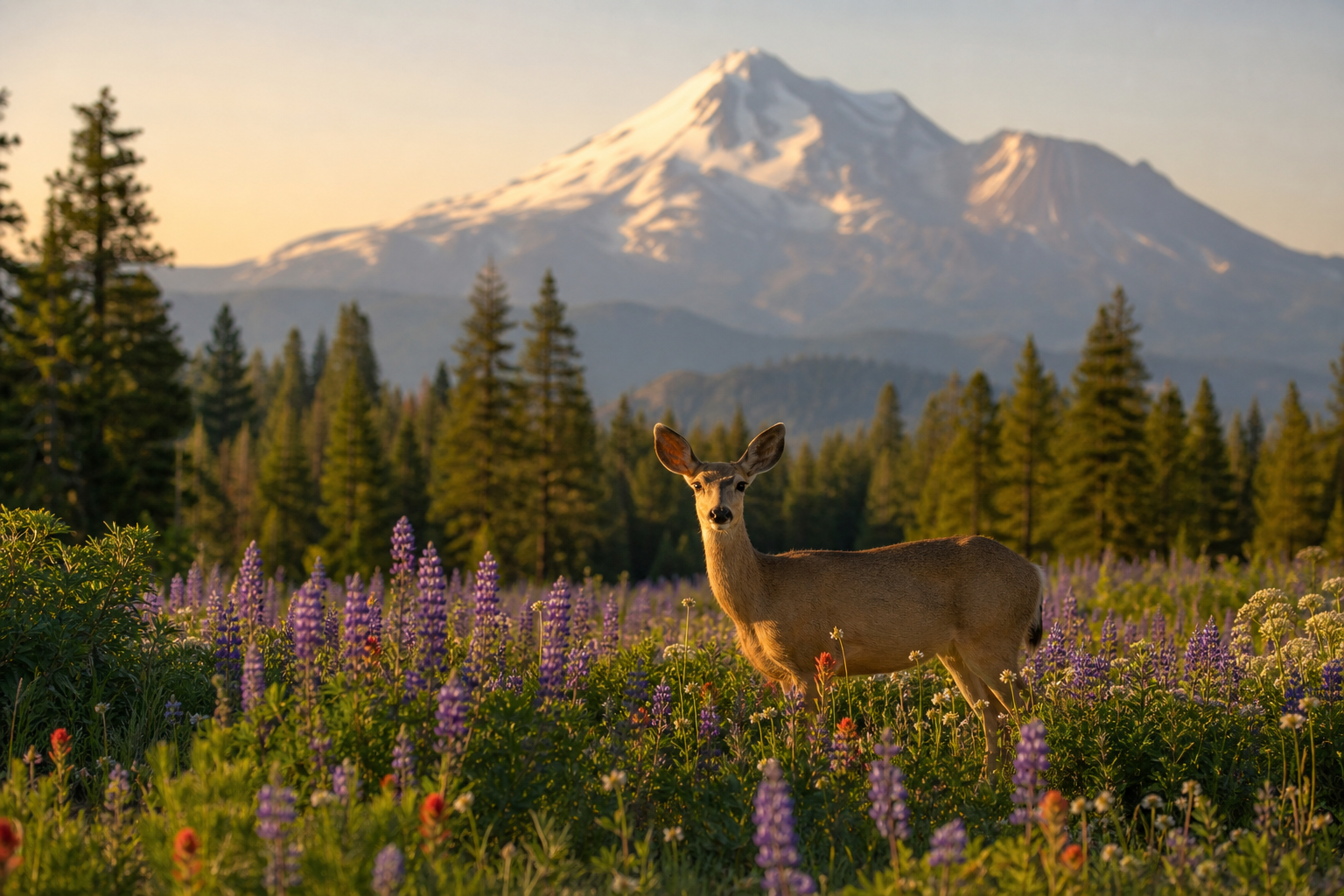
Mount Shasta’s lower and mid-elevation forests are dominated by conifers many visitors can identify with a little practice: ponderosa pine, Jeffrey pine, sugar pine, Douglas-fir, incense cedar, white fir, red fir, and, higher up, mountain hemlock. These forests are layered habitats, not just stands of trees. The canopy shelters birds, dead snags support cavity nesters, shrubs provide forage, and fallen logs hold insects, fungi, salamanders, lizards, and moisture.
In our experience, the most reliable forest wildlife sightings near Mount Shasta City include black-tailed deer, western gray squirrel, Steller’s jay, northern flicker, and chipmunks. With more patience, you may detect black bear sign, hear a pileated woodpecker, spot a gray fox at dusk, or notice bats feeding over clearings.
For better viewing, follow this simple routine:
- Go early or late, especially in summer when animals avoid midday heat.
- Use binoculars instead of walking toward wildlife.
- Listen before moving; woodpeckers, jays, chickadees, and squirrels often reveal activity first.
- Never feed wildlife, even deer or squirrels that appear comfortable around people.
The U.S. Forest Service wildlife safety guidance is especially useful for recreation in national forest areas, where food storage, campsite cleanliness, and distance from bears directly affect animal behavior.
Meadows, wetlands, and wildflower zones near town
Sisson Meadow is one of the easiest places near Mount Shasta City to understand why the area’s plant life is special. Wet meadow habitats support sedges, rushes, grasses, willows, wildflowers, and pollinator plants that depend on seasonal moisture. These areas may look sturdy, but saturated soils compact quickly under repeated footsteps.
Wetlands matter because they filter water, store snowmelt, reduce downstream sediment, provide nesting habitat, and offer late-season forage when surrounding hillsides dry out. Studies summarized by the U.S. Environmental Protection Agency show that wetlands are among the most productive ecosystems on Earth, supporting wildlife density far beyond their size.
Plants visitors may notice include lupine, paintbrush, mule’s ears, yarrow, penstemon, camas, monkeyflower, manzanita, ceanothus, and native grasses. Fauna commonly linked to meadow systems include red-winged blackbirds, swallows, warblers, dragonflies, butterflies, Pacific chorus frogs, garter snakes, and small mammals.
Use this low-impact meadow routine:
- Stay on boardwalks, gravel paths, or marked routes.
- Photograph flowers without picking them.
- Keep dogs leashed where required and away from wet soils.
- Step around muddy areas rather than widening the trail.
- Use iNaturalist for identification instead of collecting samples.
If you ask, Is Mount Shasta City known for its flora and fauna?, Sisson Meadow is one of the clearest local answers because you can see water, plants, birds, insects, and mountain views from an accessible setting.
Rivers, lakes, and riparian corridors that shape local wildlife
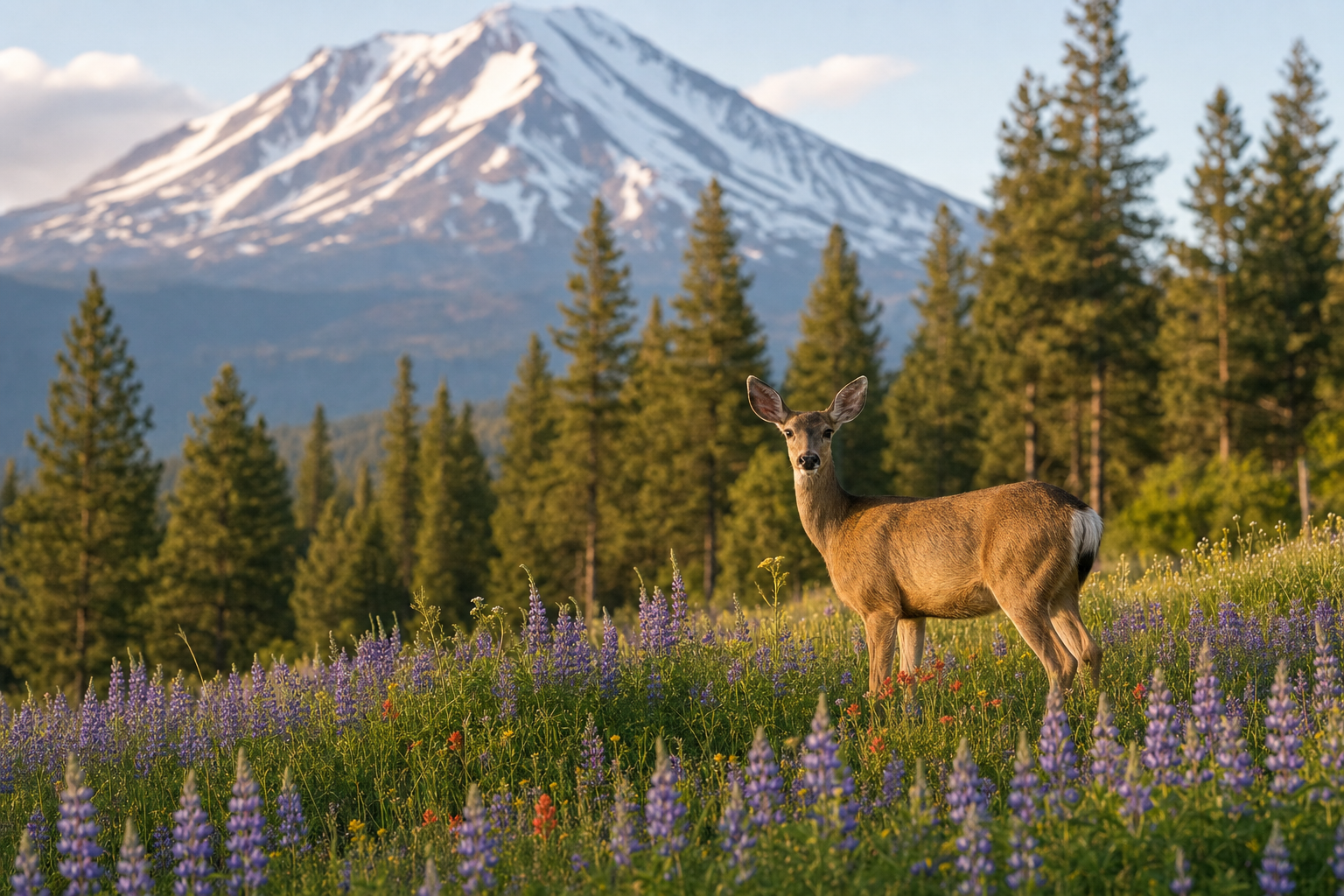
Water is the reason so much wildlife concentrates near Mount Shasta City. Lake Siskiyou, the Sacramento River headwaters, the Upper Sacramento River, spring-fed streams, and the nearby McCloud River create riparian corridors where shade, insects, fish, and cover attract animals throughout the year.
Cold, oxygen-rich water supports rainbow trout, aquatic insects, amphibians, and streamside birds. Some waters also hold brown trout, though fishing rules vary by location and season. Before fishing in 2026, check current regulations through the California Department of Fish and Wildlife inland fishing regulations, because limits, closures, barbless-hook rules, and special water designations can change.
Riparian wildlife may include osprey, bald eagle, belted kingfisher, mergansers, herons, swallows, migratory songbirds, and, where habitat allows, river otter. A realistic example: if you walk near Lake Siskiyou at sunrise on a calm June morning, you may see an osprey hunting over the water, deer feeding at the forest edge, swallows catching insects just above the lake surface, and dragonflies warming near shore vegetation.
For paddling, fishing, or shoreline walking, keep noise low, avoid trampling streamside plants, give anglers room, clean mud from boots and gear between waterways, and pack out fishing line. Lost monofilament can injure birds and mammals long after a visitor leaves.
Signature plants and wildflowers visitors should know
Mount Shasta City’s flora ranges from towering conifers to delicate meadow blooms, and elevation strongly affects what you’ll see. Near town, flowers may begin earlier in spring; higher-elevation locations such as Castle Lake routes, Bunny Flat, Panther Meadows vicinity, and upper trailheads can bloom weeks later, especially after snowy winters.
We found that the easiest way to understand local plant life is by habitat. In town parks and along gentle paths, look for shade trees, native shrubs, riparian willows, and introduced landscaping mixed with native vegetation. At Sisson Meadow, watch for sedges, rushes, grasses, camas, monkeyflower, yarrow, and pollinator-rich wetland plants. Around Lake Siskiyou trails, you may notice ponderosa pine, Douglas-fir, incense cedar, manzanita, ceanothus, lupine, paintbrush, and penstemon. On forest roads and higher trailheads, red fir, white fir, mountain hemlock, and subalpine plants become more likely.
The California Native Plant Society and Calflora are excellent references for native plant identification and rare species awareness. California has more than 6,500 native plant taxa, and the state’s botanical diversity is one reason visitors should avoid collecting flowers, seeds, bulbs, or cuttings. Removing one plant can also remove food for bees, butterflies, birds, or seed-dispersing mammals.
Use this field checklist when you spot an unfamiliar plant:
- Note the habitat: meadow, forest edge, riparian corridor, chaparral, lake shore, or high slope.
- Photograph details: flower, leaf shape, stem, bark, and the whole plant.
- Record elevation if your phone or GPS provides it.
- Avoid touching unknown plants, especially if you can’t identify them.
- Confirm later with iNaturalist, Calflora, CNPS resources, or a regional field guide.
So, Is Mount Shasta City known for its flora and fauna? For plant lovers, yes — because you can compare mixed-conifer forest, chaparral shrubs, wet meadow vegetation, riparian willow corridors, and subalpine plant communities without spending days in transit.
Wildlife in and around Mount Shasta City
Wildlife around Mount Shasta City is diverse, but your best sightings will come from knowing which animals are common, which are secretive, and which are mostly seasonal. Common or relatively visible mammals include black-tailed deer, ground squirrels, chipmunks, raccoons, striped skunks, and bats at dusk. Black bear, coyote, bobcat, and gray fox live in the broader area but are less predictable for casual visitors.
Birdlife is one of the strongest reasons nature observers return. Using habitat patterns reported by birders on eBird, you can reasonably watch for bald eagle, osprey, red-tailed hawk, turkey vulture, Steller’s jay, mountain chickadee, acorn woodpecker, pileated woodpecker, western tanager, warblers, mergansers, and seasonal waterfowl. Raptors often use open areas and lake edges, while woodpeckers and chickadees favor forests and older trees.
Smaller fauna deserve equal attention. Butterflies, native bees, dragonflies, aquatic insects, salamanders, Pacific chorus frogs, lizards, and garter snakes are key parts of the food web. Dragonflies, for example, spend much of their life cycle in water before becoming the aerial predators you see over meadows and lakes.
Wildlife safety is not optional. Keep at least 100 yards from bears when possible, store food in a vehicle or bear-resistant container, and never leave coolers unattended at picnic areas. Use a zoom lens rather than moving closer, especially around nesting birds, young animals, or feeding mammals. If you find injured wildlife, contact a local wildlife rehabilitation organization or the California Department of Fish and Wildlife rather than trying to handle the animal yourself.
Based on our research, the visitors who see the most wildlife are usually the quietest ones. Walk slowly, pause often, scan edges between habitats, and let animals reveal themselves.
Best seasons to see flora and fauna in Mount Shasta City
The best season depends on what you want to see. In 2026, plan around elevation, snowpack, temperature, and smoke conditions rather than assuming one fixed calendar. Spring brings fresh growth, frogs, bird song, and early wildflowers near town. Early summer is often the most rewarding window for wildflowers, pollinators, lake birds, and forest activity. Late summer can still be excellent near water, though heat and wildfire smoke may affect visibility.
Fall brings migration, cooler hiking weather, seed heads, golden grasses, and raptor movement. Winter is quieter but not empty: tracks in snow, bald eagles, red-tailed hawks, waterfowl, and forest birds can make cold-season visits worthwhile. Dawn and dusk are best for mammals; calm mornings are ideal for lake and wetland birding; mid-morning often works well for butterflies and wildflower photography after temperatures rise.
Elevation changes the calendar dramatically. Wildflowers near Mount Shasta City and Sisson Meadow may peak weeks before higher terrain near Castle Lake, Bunny Flat, Panther Meadows, or upper Mount Shasta trailheads. Snow can linger into June in high areas, and some roads or trailheads may remain seasonally closed. Always check Shasta-Trinity National Forest updates before committing to a route.
| Season | Likely plants | Likely wildlife | Best locations | Visitor tips |
|---|---|---|---|---|
| Spring | Fresh meadow growth, early blooms | Songbirds, frogs, deer | Sisson Meadow, City Park | Expect mud; stay on paths |
| Early summer | Lupine, paintbrush, penstemon | Osprey, butterflies, swallows | Lake Siskiyou, forest trails | Start early; bring binoculars |
| Late summer | Dry meadow grasses, riparian plants | Deer, raptors, dragonflies | Lakes, rivers, shaded forest | Check smoke and fire rules |
| Fall | Color, seed heads, shrubs | Migrants, hawks, waterfowl | Shasta Valley, Lake Siskiyou | Use layers for cold mornings |
| Winter | Conifers, snow-covered vegetation | Tracks, raptors, forest birds | Lower trails, open areas | Check road conditions |
If your question is Is Mount Shasta City known for its flora and fauna?, seasonal variety is part of the answer: the same trail can feel biologically different in April, July, October, and January.
Best places near Mount Shasta City to experience plants and wildlife
The best nature stops near Mount Shasta City are close enough to combine, but you’ll have a better experience if you choose two habitats in one day instead of rushing five. We recommend pairing a meadow or park with a lake, river, or forest trail so you see how plants and wildlife shift across water, elevation, and tree cover.
Sisson Meadow is easy, close to town, and excellent for wet meadow plants, dragonflies, swallows, blackbirds, deer, and mountain views. It suits families, birders, photographers, and first-time visitors; stay on designated paths because wet soils are sensitive. Mount Shasta City Park is another easy stop, especially for riparian vegetation, shaded walking, and the Sacramento River headwaters area.
Lake Siskiyou Trail offers lake edges, forest patches, open water, osprey, mergansers, swallows, deer, conifers, and wildflowers in season. Difficulty varies by segment, parking can fill on summer weekends, and sunrise is best for quiet wildlife viewing. Castle Lake and nearby routes provide higher-elevation scenery, conifers, wildflowers, amphibian habitat, and colder conditions; snow may linger into early summer.
Bunny Flat gives access to higher Mount Shasta forest and subalpine influence, though conditions change quickly and weather exposure is real. Castle Crags State Park combines dramatic granite-like spires, oak, pine, chaparral, and forest habitats; it suits hikers and photographers but can be hot in summer. McCloud River is ideal for riparian forest, aquatic life, waterfalls, and trout waters. Shasta Valley Wildlife Area is distinct from the mountain forest, with waterfowl, raptors, open country, and seasonal wetlands.
A strong 1-day nature itinerary: start at Sisson Meadow at sunrise, spend midday walking a shaded section of Lake Siskiyou Trail, then finish with quiet birdwatching near a riparian corridor. A 2-day itinerary: add Castle Lake or Bunny Flat on day two, then visit McCloud River or Shasta Valley Wildlife Area depending on whether you prefer forest water or open-country birds. Bring binoculars, a macro lens for flowers and insects, paper or offline maps, sun protection, and layers.
How to explore responsibly without harming sensitive habitats
Responsible exploring is what keeps Mount Shasta City’s plant and wildlife habitats healthy for future visitors. The rules are simple, but the reasons are concrete: meadow soils compact easily, nesting birds may abandon disturbed areas, bears can become food-conditioned, and invasive plants often spread along road edges, trailheads, and boot soles.
Use this step-by-step checklist every time you head out:
- Stay on trails, boardwalks, and durable surfaces, especially in wet meadows and riparian zones.
- Keep distance from wildlife; use binoculars or a zoom lens instead of approaching.
- Store food securely in your vehicle, bear-resistant storage, or closed containers.
- Clean boots, tires, and dog paws to reduce the spread of invasive seeds.
- Pack out all trash, including fruit peels, fishing line, dog waste, and food scraps.
- Follow fire restrictions, which can change quickly during dry or windy weather.
Guidance from Leave No Trace, the California Department of Fish and Wildlife, and the U.S. Forest Service all point toward the same habit: reduce your impact before there is a visible problem. In fire-adapted forests, careless sparks can become dangerous during hot, dry periods; in wetlands, one shortcut can become a muddy social trail that damages plants for an entire season.
Dogs need special attention. Leash them where required, keep them away from wildlife and wetlands, carry waste bags, and don’t allow chasing of deer, birds, squirrels, or reptiles. Even if your dog doesn’t catch an animal, the stress response can interrupt feeding, nesting, or resting.
Photography ethics matter too. Don’t bait animals, don’t disclose sensitive species locations online, and don’t step off trail to photograph rare flowers. If you’re still wondering, Is Mount Shasta City known for its flora and fauna?, the answer depends partly on visitors protecting the same habitats they came to admire.
Conclusion: How to plan a flora and fauna trip to Mount Shasta City
Mount Shasta City is known for its flora and fauna because it offers unusually accessible forests, meadows, wetlands, lakes, rivers, and mountain habitats in one compact destination. You don’t need a weeklong expedition to experience biological variety here; you need the right season, realistic expectations, and a plan that respects sensitive places.
For a strong first visit in 2026, choose two or three habitats rather than trying to cover everything. Check Shasta-Trinity National Forest conditions, review California Department of Fish and Wildlife rules if you plan to fish, and bring binoculars, layers, water, sun protection, and a regional field guide or plant identification app.
A simple first-time plan works well: spend the morning at Sisson Meadow or Mount Shasta City Park, walk part of Lake Siskiyou around midday, then finish the afternoon near a quiet riparian corridor where birds and mammals become active again. If you have a second day, add Castle Lake, Bunny Flat, McCloud River, Castle Crags State Park, or Shasta Valley Wildlife Area depending on weather and access.
We recommend contributing careful observations through iNaturalist or eBird, especially when you can identify species accurately and avoid sharing sensitive locations. These records can help researchers, land managers, and local conservation groups better understand species patterns in and beyond.
The best sightings rarely come from rushing. They come from patience, quiet movement, and respect for the living systems that make Mount Shasta City memorable.
Key Takeaways
- Mount Shasta City is genuinely known for flora and fauna because forests, wetlands, lakes, rivers, meadows, and mountain habitats meet within a short distance.
- The best first-time nature stops are Sisson Meadow, Mount Shasta City Park, Lake Siskiyou, Castle Lake, McCloud River, and Shasta Valley Wildlife Area.
- Spring and early summer are strongest for wildflowers and bird activity, while fall and winter can be excellent for raptors, tracks, migration, and quieter viewing.
- Responsible behavior matters: stay on trails, keep distance from wildlife, store food securely, clean boots, leash dogs where required, and follow fire restrictions.
- For the best sightings, move quietly, visit at dawn or dusk, bring binoculars, and record observations responsibly through eBird or iNaturalist.
Frequently Asked Questions
Is Mount Shasta City known for its flora and fauna?
Yes. Is Mount Shasta City known for its flora and fauna? It is, because the area combines conifer forests, wet meadows, lakes, cold streams, volcanic soils, and access to large public lands near Mount Shasta.
What wildlife can you see near Mount Shasta City?
Common sightings include black-tailed deer, Steller’s jays, woodpeckers, squirrels, chipmunks, swallows, osprey, and seasonal waterfowl. Less predictable animals include black bear, bobcat, gray fox, river otter, and bald eagle.
When is the best time to see wildflowers near Mount Shasta City?
Late spring through early summer is usually best near town, while higher-elevation wildflowers may peak later depending on snowpack. In snowy years, blooms near Castle Lake, Bunny Flat, or higher Mount Shasta trailheads can lag several weeks behind lower meadows.
Is Lake Siskiyou good for wildlife watching?
Yes. Lake Siskiyou is good for watching osprey, swallows, mergansers, deer near forest edges, dragonflies, and seasonal bird activity, especially on calm mornings.
Are there bears around Mount Shasta City?
Black bears live in the broader Mount Shasta area, but sightings are not guaranteed. Store food securely, never feed wildlife, keep distance, and report aggressive or injured animals to the appropriate local agency.
Where should first-time visitors go for plants and wildlife?
Start with Sisson Meadow, Mount Shasta City Park, and Lake Siskiyou Trail because they are close to town and offer varied habitats. If you have more time, add Castle Lake, McCloud River, Castle Crags State Park, or Shasta Valley Wildlife Area.